
Cash Envelope System vs. Digital Pots: Which Works Best in 2026?
Key Points
Stop falling for budgeting advice that ignores how humans actually behave with money. This is the definitive analysis of envelope budgeting versus digital pots—including the psychological warfare your
The Brutal Truth About Budgeting Methods That Actually Work
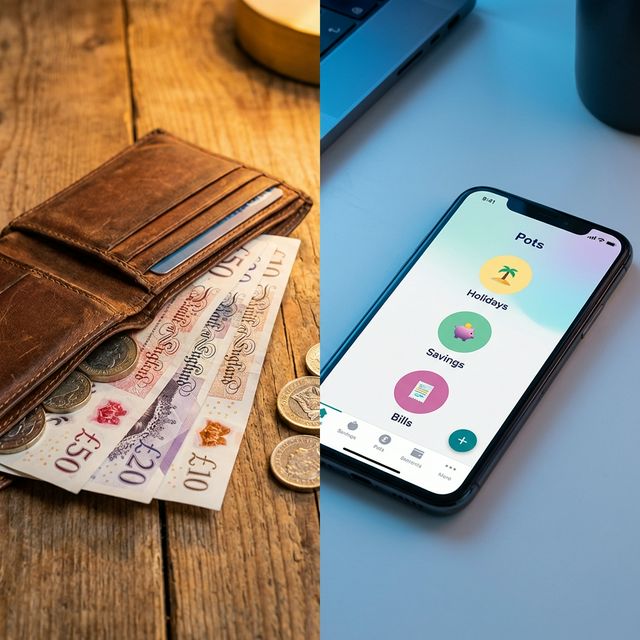
Let's cut through the Pinterest-perfect budgeting fantasies: most people fail at budgeting not because they don't understand the mechanics, but because they choose methods that fight against their actual behavior patterns. The cash envelope system works brilliantly for people who struggle with digital spending impulses. Digital pots work perfectly for tech-savvy households who want automation and optimization. Neither works universally, despite what their zealous advocates claim.
The UK's rapid shift to contactless payments has created a unique challenge for traditional cash budgeting. According to UK Finance 2026 data, 85% of transactions are now card-based, with cash usage dropping to just 15% (down from 60% in 2010). Meanwhile, digital banking apps like Monzo (7.4M users) and Starling (3.8M users) have evolved sophisticated "pot" systems that replicate envelope psychology while working with modern payment methods. The question isn't which system is theoretically better—it's which system works with your brain, your lifestyle, and 2026's payment realities. Try both methods for one month each and track which helps you save more—data beats theory.
This guide dissects both approaches with surgical precision. We'll examine the psychology behind why each method works, analyze UK-specific implementation challenges, test real-world scenarios, and give you a framework for choosing the system that matches your money personality. For foundational budgeting frameworks, see our 50/30/20 Budget Guide, Good Budgeting Techniques, or explore bank account optimization. Because the best budgeting method is the one you'll actually use for longer than three weeks.
2026 UK Budgeting Reality Check
Cash Usage Statistics
- 15% of UK transactions now cash-based (down from 60% in 2010)
- Average person carries £20-£35 cash
- 23% of UK adults are "virtually cashless"
- Cash still preferred for tips, markets, small local businesses
- £1-£5 transactions increasingly card-based
Digital Banking Adoption
- 73% of UK adults use mobile banking apps
- Monzo: 7+ million users with spending categorization
- Starling: 3.6 million users with savings "Spaces"
- 89% prefer contactless/mobile payments for daily spending
- Average person checks banking app 2-3 times daily
1. Cash Envelope System Fundamentals: The Original Spending Guardrail
The cash envelope system forces spending constraints through physical limits—when the money in your "groceries" envelope is gone, you're done spending on food. No overdrafts, no "just this once" exceptions, no mental gymnastics about whether something fits the budget.
Our guide to proven budgeting methods covers this in more detail.
How Cash Envelopes Work in Practice
Basic Setup Process
- Calculate Category Budgets
Groceries: £320/month, Entertainment: £150/month, Transport: £100/month, Personal: £80/month
- Withdraw Cash Monthly
Get physical cash from ATM or bank counter. Request smaller notes (£10s, £5s) for easier envelope distribution.
- Label and Fill Envelopes
Use clearly labeled envelopes or cash organizer wallet. Distribute cash according to budget categories.
- Spend Only From Envelopes
Take relevant envelope for shopping trips. When empty, category spending stops until next month.
UK-Specific Challenges
Contactless Everywhere
Many UK shops now prefer cards. Some coffee shops, car parks, and public transport are card-only.
Online Shopping Reality
Amazon, grocery delivery, subscriptions require cards. Pure cash budgeting excludes major spending categories.
Security Concerns
Carrying £500+ cash creates theft/loss risks. No fraud protection compared to cards.
ATM Access Fees
Free ATMs declining. Some charge £1.50-£3.00 per withdrawal, adding costs to cash budgeting.
✅ When Cash Envelopes Excel
- Grocery shopping: Physical cash creates immediate spending awareness
- Discretionary spending: Entertainment, dining out, personal purchases
- Local transactions: Markets, tips, small businesses, cash-preferring vendors
- Overspending problems: Forces hard stops when money runs out
- Technology anxiety: No apps, no accounts, no digital complexity
- Immediate feedback: Physically seeing money disappear creates awareness
- Partner coordination: Shared physical envelopes prevent duplicate spending
- Emergency discipline: Cannot overspend beyond physical cash available
2. Digital Pots Mechanics: Envelope Psychology Meets Modern Banking
Digital pots replicate envelope psychology by segregating money into virtual categories while maintaining the convenience of card payments. Advanced UK banking apps now offer sophisticated pot systems with automation, interest earning, and spending controls.
UK Digital Pot Options Comparison 2026
| Banking App | Pot Features | Automation | Interest Earning | Best For |
|---|---|---|---|---|
| Monzo | Unlimited pots, spending from pots, shared pots | Round-ups, scheduled transfers, salary sorting | 4.06% AER on some pots | Visual budgeters |
| Starling Bank | Savings Spaces, Goals, connected debit cards | Round-ups, regular savings, goal targeting | 3.25% AER on Spaces | Goal-oriented savers |
| Chase UK | Savings Goals, spending insights | Automatic savings, cashback round-ups | 4.1% AER + 1% cashback | Cashback maximizers |
| NatWest | Digital Envelopes, spending controls | Limited automation features | Standard savings rates | Traditional bankers |
| Halifax | Savings Goals, spending categories | Basic standing orders | Standard savings rates | Simple budgeters |
Monzo Pot Setup Guide
Create Budget Pots
Groceries, Entertainment, Transport
Set Monthly Targets
£320, £150, £100 respectively
Enable Salary Sorter
Auto-distribute on payday
Activate Spending from Pots
Spend directly from categories
Starling Spaces Setup
Create Savings Spaces
Goals-based organization
Set Round-up Rules
Spare change to emergency fund
Configure Regular Savings
Weekly/monthly transfers
Link Connected Card
Spend from specific Spaces
✅ When Digital Pots Excel
- Online purchases: Amazon, delivery apps, subscriptions work seamlessly
- Contactless spending: Works with UK's card-dominant payment culture
- Couples budgeting: Shared pots with real-time balance updates
- Interest earning: Budget money earns 3-4% while allocated
- Automation features: Round-ups, salary sorting, recurring transfers
- Emergency access: Instant transfers between pots when needed
- Spending insights: Automatic categorization and analytics
- Security: Fraud protection, spend notifications, account freezing
3. Psychological Impact Comparison: How Your Brain Responds to Each Method
The effectiveness of any budgeting method depends on psychological triggers. Cash creates "payment pain" through physical loss, while digital systems rely on visual feedback and automated constraints. Understanding your money psychology determines which approach works better.
Money Psychology: Cash vs Digital
Cash Psychology Effects
Payment Pain
Physical act of handing over cash creates immediate awareness of spending. Brain registers "loss" more strongly than card transactions.
Visual Depletion
Watching envelope get thinner provides constant budget feedback. Empty envelope = immediate spending stop.
Friction Increase
ATM trips, exact change, cash counting create spending barriers. More friction = less impulse spending.
Concrete Limits
Cannot spend beyond physical cash available. No overdrafts, no "borrowing from next month," no exceptions.
Digital Psychology Effects
Reduced Payment Pain
Card transactions feel less "real." Brain doesn't register spending as strongly, leading to higher spending amounts.
Gamification Appeal
Progress bars, goal tracking, achievement badges make budgeting feel like a game rather than restriction.
Convenience Bias
Easy transfers between pots can undermine budget discipline. "Just this once" becomes "just this month."
Data Overload
Too much information can reduce decision quality. Analysis paralysis replaces spending awareness.
🧠 Personality-Based Method Selection
Visual/Kinesthetic Learners
Best: Cash envelopes
Need physical interaction and visual depletion to maintain spending awareness.
Tech-Comfortable Optimizers
Best: Digital pots
Enjoy automation, data analysis, and efficiency optimization over manual tracking.
Impulse Spenders
Best: Cash envelopes
Need maximum friction and hard limits to control spontaneous purchases.
⚠️ Psychological Traps to Avoid
- Cash perfectionism: Abandoning system after one card purchase
- Digital over-complexity: Creating 20+ pots that overwhelm rather than clarify
- Method switching: Constantly changing systems instead of addressing spending habits
- Technology dependence: System fails when app doesn't work or phone dies
- Emergency exceptions: Using "emergencies" to justify budget breaking
- Partner undermining: One person using different method creates conflicts
- Security obsession: Letting security concerns prevent any budgeting
- Automation assumptions: Believing technology automatically creates discipline
4. UK Banking App Options: Complete Digital Pot Analysis
UK challenger banks have created sophisticated digital envelope systems that go far beyond traditional banking. Each app approaches budget segregation differently, with unique strengths for different user types and spending patterns.
Detailed App-by-App Analysis
Monzo: The Visual Budgeting Champion
Standout Features
- Unlimited pots with custom images and names
- Salary Sorter: Automatically distribute payday money
- Spending from pots: Use specific pot for payments
- Shared pots: Joint budgeting with partners
- Round-up savings to nominated pot
- Visual spending breakdowns by category
Best Use Cases
- Visual learners who need clear spending feedback
- Couples wanting shared budget visibility
- People who prefer granular spending categories
- Users who want automation without complexity
- Those switching from physical envelope systems
Reality Check: Monzo's strength is simplicity, but the ease of moving money between pots can undermine budget discipline. Works best for people who need visibility more than rigid constraints.
Starling Bank: The Goal-Oriented Optimizer
Standout Features
- Savings Spaces with 3.25% interest earning
- Connected debit cards for specific Spaces
- Goal tracking with timeline projections
- Round-up rules with multiple rounding options
- Regular savings automation
- Spending insights with merchant categorization
Best Use Cases
- Goal-oriented savers with specific targets
- People who want budget money earning interest
- Users preferring automation over manual management
- Those who like detailed spending analytics
- Savers who want segregated spending cards
Reality Check: Starling excels at long-term savings goals but can feel less intuitive for day-to-day budget management. Better for disciplined savers than impulse spenders.
Chase UK: The Cashback Maximizer
Standout Features
- 1% cashback on everyday spending
- 1% AER on savings balance
- Spending insights with category breakdowns
- Automatic savings goals with round-ups
- Security features with real-time notifications
- American-style credit building features
Best Use Cases
- Cashback enthusiasts wanting spending rewards
- High-rate savings seekers
- Users wanting simple, effective budgeting
- People comfortable with American banking style
- Those prioritizing earning over complex categorization
Reality Check: Chase offers excellent rates and cashback but has simpler budgeting features compared to Monzo/Starling. Best for people who want rewards with basic envelope functionality.
Traditional Banks: The Conservative Option
NatWest, Halifax, Lloyds Features
- Basic savings goals and pots
- Standing orders and direct debits
- Simple spending categorization
- Traditional banking security
- Branch and phone support
- Integration with existing products
Best Use Cases
- Long-term traditional bank customers
- People wanting basic digital envelopes
- Users preferring established institution security
- Those needing branch banking services
- Customers with complex banking relationships
Reality Check: Traditional banks offer basic pot functionality but lack the sophistication and automation of challenger banks. Good for simple budgeting with familiar institutions.
5. Implementation Costs and Barriers: What Nobody Tells You
Both cash and digital budgeting systems have hidden costs and implementation barriers that can derail success. Understanding these upfront helps you choose the system you can actually maintain long-term.
True Cost Analysis: Cash vs Digital
| Cost Category | Cash Envelopes | Digital Pots | Annual Impact |
|---|---|---|---|
| ATM/Cash Access Fees | £1.50-£3 per withdrawal | £0 (card-based) | Cash: £18-£144/year |
| Account Fees | £0 (existing account) | £0-£5/month (premium features) | Digital: £0-£60/year |
| Lost Interest | 0% on envelope cash | 3-5% on pot money | Cash: £100-£250 lost |
| Security Risks | Theft/loss risk | FSCS protected | Cash: Potential total loss |
| Time Investment | 2-3 hours/month | 30 minutes setup + automation | Cash: 24-36 hours/year |
Cash System Implementation Barriers
ATM Access Challenges
Free ATMs declining: Lloyds, Barclays charge £1.50-£3. Link ATMs increasingly rare in rural areas.
Card-Only Venue Problems
Car parks, coffee chains, public transport increasingly card-only. Creates system breakdown scenarios.
Security and Insurance
Home insurance may not cover large cash amounts. Carrying £500+ creates theft targets.
Partner Coordination
Shared envelopes require constant communication. Double-spending risks when both partners shop.
Digital System Implementation Barriers
Technology Learning Curve
App features, automation setup, pot management require tech comfort. Overwhelming for some users.
Bank Switching Requirements
Best digital pot features require switching from traditional banks. Direct debit migrations, payroll changes.
Over-Complexity Risk
Easy to create too many pots/categories. Analysis paralysis replaces spending awareness.
Discipline Dependence
Easy transfers between pots can undermine budget constraints. Requires internal discipline.
💡 Implementation Success Strategies
For Cash Envelope Success
- Start with 3-4 categories maximum
- Plan ATM visits to minimize fees
- Keep backup card for emergencies/card-only venues
- Use hybrid approach for fixed bills (digital) + discretionary (cash)
- Create shared envelope protocols with partners
For Digital Pot Success
- Begin with simple setup, add complexity gradually
- Choose one primary banking app, avoid pot spreading
- Set up automation to reduce manual management
- Create artificial friction for pot transfers
- Use visual cues (pot names/images) for spending awareness
6. Spending Control Effectiveness: Which System Actually Stops Overspending?
The ultimate test of any budgeting system is whether it prevents overspending when you're tired, stressed, or facing temptation. Research and real-world testing reveal significant differences in how cash and digital systems control spending behavior.
Spending Control Mechanism Analysis
Cash Envelope Control Mechanisms
Physical Constraints
Cannot spend beyond available cash. No overdrafts, no borrowing, no exceptions. Hard limit creates absolute boundary.
Payment Pain
Handing over physical money triggers loss aversion. Brain registers spending as more "real" and painful.
Visual Depletion
Watching envelope get thinner provides constant spending feedback. Physical evidence of budget consumption.
Transaction Friction
Counting money, making change, handling cash creates deliberate barriers to impulse purchases.
Digital Pot Control Mechanisms
Real-Time Feedback
Instant spending notifications and balance updates. Immediate awareness of budget impact.
Automated Controls
Spending limits, pot restrictions, automated categorization reduce manual decision-making.
Visual Progress Bars
Graphical budget consumption shows spending progress. Gamification elements encourage restraint.
Social Accountability
Shared pots with partners create accountability. Spending visibility to others increases discipline.
📊 Spending Control Effectiveness by Category
| Spending Category | Cash Effectiveness | Digital Effectiveness | Winner |
|---|---|---|---|
| Grocery Shopping | ★★★★★ | ★★★ | Cash |
| Impulse Purchases | ★★★★★ | ★★ | Cash |
| Online Shopping | ★ | ★★★★ | Digital |
| Subscription Services | ★ | ★★★★★ | Digital |
| Entertainment/Dining | ★★★★ | ★★★ | Cash |
⚠️ System Failure Points
Cash System Failures
- Card-only venues force budget breaking
- Online purchases bypass envelope system
- Emergency ATM fees discourage cash use
- Partner coordination failures lead to overspending
- System abandonment after first "exception"
Digital System Failures
- Easy pot transfers undermine constraints
- Notification fatigue reduces spending awareness
- App complexity leads to abandonment
- Technology failures disable spending controls
- Reduced payment pain increases overspending
7. Hybrid Approach Strategies: Best of Both Worlds
For most UK households in 2026, a hybrid approach combining cash envelopes for discretionary spending with digital pots for everything else provides optimal control while working with modern payment realities.
Optimal Hybrid Implementation Models
Model 1: Cash for Discretionary, Digital for Fixed
Cash Envelope Categories
- Groceries: £300/month in physical cash
- Entertainment: £150/month for dining out, pubs
- Personal spending: £100/month for clothes, treats
- Transport: £75/month for fuel, parking, taxis
Digital Pot Categories
- Bills: All direct debits and standing orders
- Online shopping: Amazon, delivery apps, subscriptions
- Savings goals: Emergency fund, holidays, house deposit
- Emergency buffer: £200 for unexpected card-only expenses
Best for: People who struggle with grocery/entertainment overspending but want convenience for online purchases and bill management.
Model 2: Weekly Cash Allowance + Digital Everything Else
Weekly Cash System
- £100 weekly cash allowance for all discretionary spending
- Covers coffee, lunch, small purchases, entertainment
- When cash is gone, no more discretionary spending
- Simple one-envelope system with weekly resets
Digital Management
- All major expenses through digital pots
- Groceries via online delivery or contactless payments
- Bills, subscriptions, savings fully automated
- Main shopping through card with pot allocation
Best for: People who want simplicity with maximum constraint on small impulse purchases while maintaining modern payment convenience.
Model 3: Location-Based Spending Rules
Cash-Only Locations
- Supermarkets: Physical cash for grocery shopping
- Pubs/restaurants: Cash for social dining out
- Local shops: Cash for independent retailers
- Markets: Cash for fresh food, local products
Card-Only Locations
- Online: All internet purchases via designated pot
- Utilities: Bills and subscriptions on autopay
- Large retailers: Department stores, chains use cards
- Services: Professional services, bookings via card
Best for: People who want to use cash where it provides maximum psychological benefit while using cards where they're required or more convenient.
Model 4: Graduated Restriction System
High-Restriction (Cash)
- Problem categories where you overspend
- Impulse purchase prone areas (clothes, treats)
- Social spending that gets out of control
- Any category where you want maximum friction
Medium-Restriction (Digital Pots)
- Categories where you need some control
- Online shopping with spending limits
- Entertainment that requires card payment
- Travel and transportation expenses
Best for: People who want customized restriction levels based on their specific spending weaknesses and behavioral patterns.
🔧 Hybrid Implementation Checklist
Action Checklist
- Identify your highest overspending categories
- Determine which purchases must be cash vs card
- Set up digital pots for automated/online expenses
- Create cash withdrawal schedule and amounts
- Plan for card-only emergencies and exceptions
- Test system for 1 month with adjustments
- Create partner communication protocols
- Set up automation for digital categories
- Plan monthly system review and optimization
- Prepare backup plans for system failures
Complete Budgeting Method FAQ: 20 Essential Questions Answered
1. Which budgeting method works better for beginners?
Cash envelopes work better for beginners who struggle with overspending because they provide immediate, physical feedback and create hard spending limits. The visual and tactile nature of cash makes budget boundaries more concrete than digital abstractions.
However, if you're comfortable with technology and most of your spending is already digital, starting with a simple digital pot system (like Monzo with 3-4 categories) can be more sustainable. The key is matching the method to your current payment habits rather than forcing radical changes.
Recommendation: Start with cash for groceries and entertainment (your biggest variable expenses) while keeping everything else digital. This hybrid approach provides maximum learning value with minimum disruption to existing habits.
2. How do I handle emergencies when using cash envelopes?
Real emergencies (medical bills, car repairs, urgent home repairs) should never be constrained by envelope systems. Keep an emergency fund in a separate savings account with immediate access. This isn't part of your monthly budget—it's crisis protection.
For "everyday emergencies" (ran out of grocery money, need cash for unexpected work lunch), you have three options: transfer from another envelope category, use a backup debit card and adjust next month's cash allocation, or simply wait until next month if it's not truly urgent.
Critical point: Don't let perfect envelope discipline prevent genuine emergency responses. But also don't let everyday poor planning become "emergencies" that undermine your entire system. Most "emergencies" are predictable expenses you haven't budgeted for properly.
3. Can couples successfully use different budgeting methods?
Mixed methods can work but require excellent communication and clear boundaries. One partner might use cash envelopes for personal spending while the other uses digital pots, but shared expenses (groceries, entertainment) need unified approaches to prevent conflicts and double-spending.
The bigger challenge is philosophical differences about money management. If one partner sees cash envelopes as restrictive while the other finds digital spending triggering, you need to address these underlying attitudes before choosing methods.
Best practice: Agree on shared expense management (jointly accessible digital pots or shared physical envelopes) while allowing individual methods for personal spending. Regular budget meetings become essential to coordinate different systems and maintain financial intimacy.
4. Which banking app is genuinely best for digital envelope budgeting?
Monzo provides the most intuitive envelope-style experience with unlimited pots, spending from pots, and visual feedback that most closely replicates physical envelope psychology. Starling Bank offers better interest rates and goal-focused features but feels less like traditional envelope budgeting.
Chase UK provides excellent cashback and high savings rates but has simpler budgeting features. Traditional banks (NatWest, Halifax) offer basic pot functionality but lack the sophistication and automation of challenger banks.
Decision framework: Choose Monzo if you want closest envelope psychology, Starling if you prioritize automation and interest earning, Chase if you want rewards with basic budgeting, traditional banks if you need full-service banking relationships. Consider switching costs vs. benefits before moving from established banking relationships.
5. How do I handle online shopping with cash envelope budgeting?
Pure cash envelope systems break down with online purchases, which is why hybrid approaches work better in 2026. Three strategies: maintain a designated "online shopping" pot alongside cash envelopes, transfer money from relevant cash envelope to checking account before online purchases, or accept that cash envelopes only work for in-person spending.
For Amazon and regular online purchases, consider scheduling them monthly and funding a digital pot specifically for online spending. This maintains the constraint psychology while working with modern purchasing realities.
Practical solution: Use cash for all in-person discretionary spending (groceries, dining, entertainment) and a separate digital pot with monthly limits for online purchases. This captures the psychological benefits of cash where it works best while accommodating digital commerce necessities.
6. Is carrying large amounts of cash actually dangerous in the UK?
The UK has relatively low violent crime rates, but carrying £500+ cash does create unnecessary risks. Theft, loss, accidental damage, or simple forgetfulness can eliminate your entire monthly budget instantly. Most home insurance policies don't cover large cash amounts, and you have zero fraud protection compared to cards.
More practical concerns: ATM skimming, counterfeit notes, and the inconvenience of finding working ATMs for large withdrawals. Many banks now limit daily cash withdrawal amounts, making large envelope funding difficult.
Risk mitigation: Limit cash to weekly rather than monthly amounts, use multiple smaller envelopes rather than large single amounts, keep receipts for cash withdrawals for insurance purposes, and maintain backup card access for emergencies. Consider whether the psychological benefits outweigh the practical risks for your situation.
7. How do I stop myself from transferring money between digital pots?
Digital pot systems fail when transfers become too easy, undermining the constraint psychology that makes budgeting work. Create artificial friction: use different banking apps for different pot categories, set up scheduled transfers rather than instant access, or involve your partner in transfer decisions for accountability.
Some users create "cooling off" rules: wait 24 hours before any pot transfer, write down the reason for the transfer and review monthly patterns, or set maximum transfer amounts that require extra authentication.
Effective strategies: Use notice period savings accounts for some pots (creates 30-90 day transfer delays), set up pot transfers only through computer rather than phone apps, or create joint accountability with partners where both must approve transfers above £50. The goal is maintaining helpful constraints without creating system abandonment.
8. Which method works better for irregular income (freelancers, contractors)?
Digital pots work better for irregular income because they enable percentage-based budgeting rather than fixed amounts. When income varies, you need flexible allocation systems that can handle £2,000 one month and £5,000 the next without system breakdown.
Cash envelopes become problematic with irregular income because you either have too much or too little cash for meaningful budgeting. Variable income needs smoothing mechanisms (savings during high months, careful spending during low months) that digital systems handle better.
Irregular income strategy: Use digital pots with percentage allocations (30% living expenses, 25% taxes, 20% savings, 25% irregular expenses), maintain larger emergency funds to smooth income fluctuations, and consider advanced budgeting techniques for variable income that work with your specific industry patterns.
9. How do I handle bill payments and subscriptions with cash envelope systems?
Cash envelopes don't work for bill payments, subscriptions, or any automated payments—these require digital systems. Most successful cash users maintain separate checking accounts for fixed bills while using cash only for variable, discretionary spending categories.
Set up a dedicated "bills" account that receives automatic transfers for all fixed expenses, then use cash envelopes only for categories like groceries, entertainment, personal spending, and transport where cash provides psychological benefits.
Implementation tip: Calculate total monthly fixed expenses, set up automatic transfer to bills account on payday, then convert remaining money to cash for envelope categories. This creates a hybrid system that handles modern bill payment realities while maintaining cash control for overspending-prone categories.
10. Can I earn interest on money in digital pots?
Yes, and this is a major advantage of digital systems over cash envelopes. Starling Bank pays 3.25% AER on Savings Spaces, Chase UK offers 4.1% on savings goals, and some Monzo pots earn 4.06% AER. Your budget money earns returns while allocated to categories.
This means £5,000 spread across digital pots could earn £150-£200 annually compared to £0 in cash envelopes. For larger budget amounts, this interest difference becomes substantial over time and provides additional motivation for digital systems.
Optimization strategy: Use high-yield digital pots for larger, less-frequently accessed budget categories (annual expenses, emergency funds) while potentially using cash for small, daily spending categories where interest earnings would be minimal anyway. This maximizes both returns and psychological benefits.
11. How do I track spending with cash envelopes vs digital pots?
Cash envelope tracking is simple but manual: keep receipts, note envelope balances, and record what you bought. Digital pots provide automatic tracking with categorization, spending patterns, and analytics, but can create information overload that reduces spending awareness.
The psychological trade-off: manual cash tracking increases spending awareness through deliberate record-keeping, while digital automation can reduce awareness despite providing better data. Choose based on whether you want maximum awareness (cash) or maximum convenience (digital).
Best practices: Cash users should photograph receipts and do weekly envelope reconciliation. Digital users should regularly review spending summaries rather than just checking balances. Both methods benefit from weekly review sessions to maintain spending awareness and system effectiveness.
12. What happens if I lose cash or my phone with digital banking apps?
Lost cash is gone forever with no recovery options, which is why many users limit cash amounts to weekly rather than monthly allocations. Lost or stolen phones can be remotely wiped, and banking apps require biometric or PIN access, but you lose temporary access to your budget system.
Digital banking offers superior security: fraud protection, account freezing, transaction monitoring, and FSCS protection up to £85,000. However, technical failures, app outages, or phone problems can temporarily disable your entire budget system.
Risk management: Cash users should limit amounts and keep backup cards for emergencies. Digital users should maintain emergency cash reserves, know how to access accounts via computer/website, and have backup authentication methods set up. Neither system should be your only access to money.
13. How long does it take to see real behavior change with each method?
Cash envelope users typically see immediate spending reduction (week 1-2) because physical constraints force behavior change quickly. However, system abandonment rates are high—many people quit within 1-2 months due to convenience issues or imperfect implementation.
Digital pot users experience more gradual behavior change (4-8 weeks) as they develop new habits around checking balances and respecting digital boundaries. But digital systems tend to have higher long-term adherence due to convenience and automation features.
Realistic timeline: Expect 6-12 weeks for any budgeting method to become habitual. Initial dramatic changes (week 1-3) often reverse as novelty wears off. Real, sustainable behavior change requires 2-3 months of consistent use, regardless of method chosen.
14. Should I use the same method for all spending categories?
No—different spending categories benefit from different constraint mechanisms. Groceries and entertainment respond well to cash constraints due to high impulse potential, while bills and subscriptions require digital automation for convenience and reliability.
Consider your spending weaknesses when choosing methods per category. Use cash for categories where you consistently overspend, digital for categories that require automation or online access, and hybrid approaches for categories that need flexibility.
Category-based strategy: High-temptation categories (food, entertainment, personal spending) often benefit from cash constraints. Predictable categories (bills, savings, insurance) work better with digital automation. Online-heavy categories (subscriptions, shopping) require digital systems. Match the method to the psychology and practicality of each category.
15. How do I choose between different digital banking apps for pot systems?
Choose based on your primary needs: Monzo for visual simplicity and envelope-like psychology, Starling for goal-based saving with higher interest rates, Chase for cashback rewards with basic budgeting, traditional banks for full-service relationships with basic pot features.
Consider switching costs, existing banking relationships, and feature priorities. Don't chase marginally better features if your current bank offers adequate pot functionality—system consistency matters more than perfect features.
Decision process: List your must-have features (spending from pots, automation, interest rates, cashback), test apps with small amounts before full switches, and consider using challenger banks for budgeting while maintaining traditional banks for comprehensive banking needs. Our digital money management guide provides detailed app comparisons and switching strategies.
16. What should I do when my chosen budgeting method stops working?
Method failure usually indicates changed circumstances rather than system inadequacy. Life changes (income increase/decrease, family changes, new expenses) often require system adjustments rather than complete method switches.
Before abandoning a method, try adjusting amounts, simplifying categories, or addressing specific failure points. Often the method works but the implementation needs refinement based on real-world usage patterns.
Troubleshooting approach: Identify specific failure points (too many categories, unrealistic amounts, inconvenient access), make targeted adjustments rather than wholesale changes, and give modifications 2-4 weeks to take effect. If fundamental mismatches exist between your personality and the method, then consider switching to better-aligned approaches.
17. How do I maintain budgeting discipline when traveling or during holidays?
Travel disrupts both cash and digital systems but requires advance planning rather than system abandonment. For cash users, research ATM availability and fees at destinations, consider travel-specific envelopes with higher amounts, and maintain backup card access for emergencies.
Digital users should set up travel-specific pots, research foreign transaction fees, ensure app access abroad, and plan for connectivity issues. Both methods benefit from dedicated "holiday spending" categories that acknowledge different spending patterns during travel.
Travel strategy: Create separate holiday budgets rather than trying to maintain normal spending patterns, plan for currency exchange and international fees, maintain emergency access through multiple payment methods, and resume normal budgeting immediately upon return. Holidays are temporary—don't let them permanently derail systematic money management.
18. Can children and teenagers use these budgeting methods effectively?
Cash envelopes work excellently for children because physical money creates immediate understanding of spending limits and consequences. Digital systems work better for teenagers who are already comfortable with mobile technology and need experience with modern payment methods.
For family budgeting education, consider starting children with cash systems to build fundamental money awareness, then transitioning to digital systems as they mature and need more sophisticated financial tools.
Age-appropriate implementation: Ages 6-12: Physical cash allowances with envelope-style organization, Ages 13-16: Prepaid cards with spending limits and category tracking, Ages 16+: Full digital banking with pot systems and automated savings. Focus on building money awareness first, then adding technological sophistication as maturity increases.
19. How do these methods handle unexpected expenses or income changes?
Cash envelope systems struggle with unexpected changes because physical cash allocations are rigid and difficult to adjust mid-month. Digital pot systems handle changes better through instant transfers and reallocation, but this flexibility can undermine budget discipline if overused.
Both systems benefit from emergency funds that sit outside the regular budgeting framework. True emergencies (medical bills, essential repairs) should never be constrained by budgeting systems—that's what emergency funds exist to handle.
Flexibility framework: Distinguish between true emergencies (use emergency fund) and poor planning (accept consequences or carefully adjust budget). For income increases, resist lifestyle inflation by maintaining existing systems until new income becomes permanent. For income decreases, prioritize essential categories and reduce discretionary spending before abandoning systematic approaches. Consider our cost of living strategies for managing economic pressures.
20. Which method leads to better long-term financial outcomes?
Long-term financial success depends more on consistency than method choice. Cash envelope users who maintain their systems for 2+ years typically achieve excellent debt reduction and spending control. Digital pot users who leverage automation and optimization features often achieve better savings rates and investment habits.
The best method is the one you'll use consistently for years, not months. Consider your personality, lifestyle, and long-term financial goals when choosing systems. Perfect execution of an adequate method beats poor execution of a theoretically superior method.
Success factors: Consistency matters more than perfection, system simplicity increases long-term adherence, regular review and adjustment prevent gradual decay, and integration with broader financial planning (emergency funds, savings goals, debt reduction) creates compounding benefits. Choose the method that fits your life, then commit to systematic implementation rather than constant optimization.
Essential Reading for Budgeting Success
Foundation Knowledge
- Master comprehensive budgeting techniques including envelope methods and digital optimization
- Explore digital money management tools and banking apps for automated budgeting
Advanced Strategies
- Apply budgeting methods to manage UK cost of living pressures effectively
Start Saving Money Daily
Get personalized money-saving tips and financial strategies delivered to your inbox every morning. Join thousands who are building wealth one tip at a time.
Subscribe