
How to Claim an HMRC Tax Rebate in 2026: The Step-by-Step UK Guide
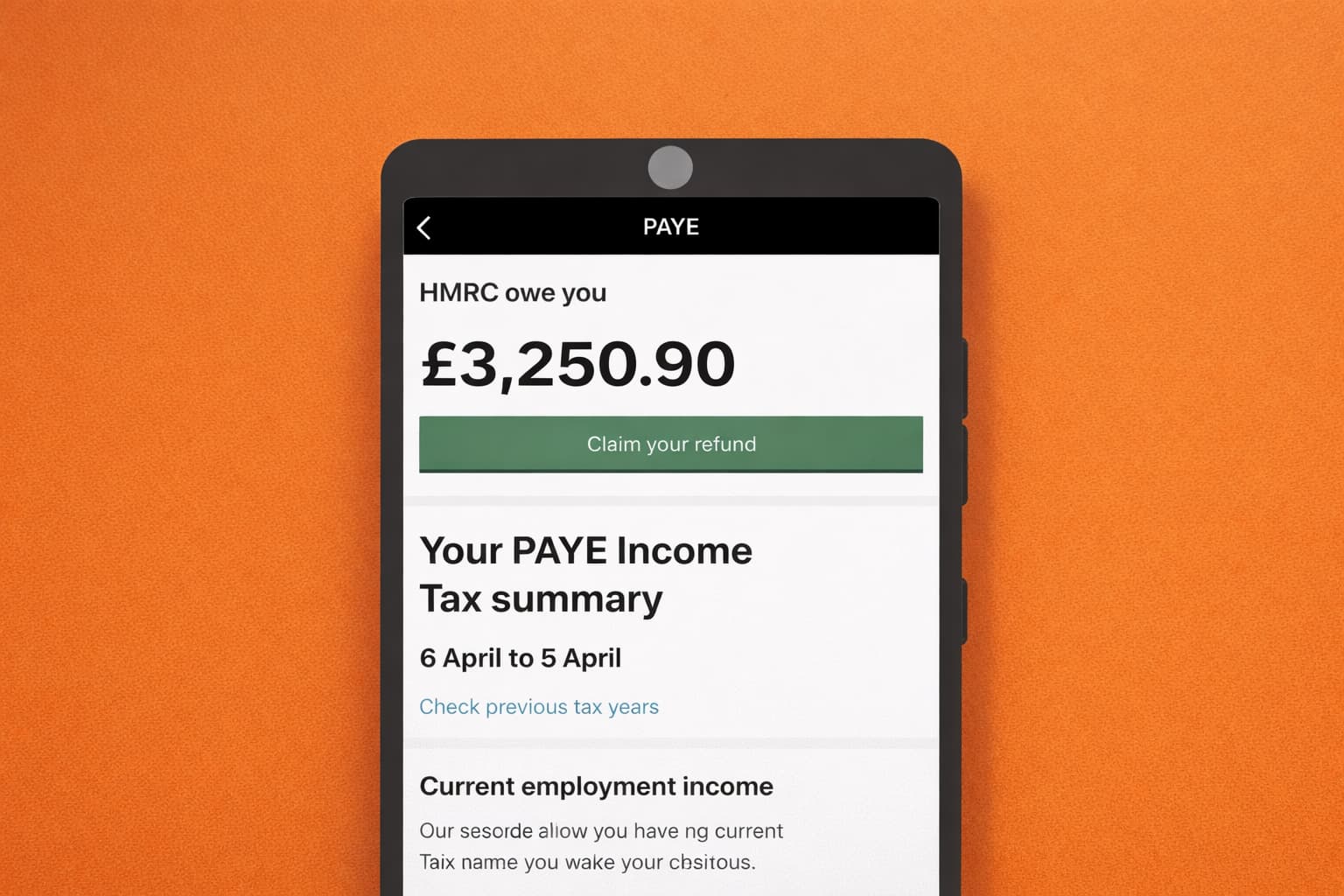
HMRC quietly overpays millions of people in tax every year — and then sits back and waits to see if you'll notice. Most people don't. Here's how to find out if they owe you money, and exactly how to get it back.
TL;DR — HMRC Tax Rebate at a Glance
Bottom Line: Millions miss out on legitimate refunds despite simple online claiming process; common triggers include wrong tax codes, multiple jobs, and unclaimed allowances, with most claims processed in 3-5 working days after a quick 15-minute online submission.
The Key Facts
- Millions of UK workers overpay income tax every year through wrong tax codes, multiple jobs, or unclaimed allowances
- You can claim back up to 4 tax years — that's potentially as far back as 2022/23
- The most common rebate triggers: emergency tax codes, two jobs, working from home, uniform allowances, Marriage Allowance, and mileage relief
- HMRC will not chase you — the burden is entirely on you to claim
- Claiming online takes about 15 minutes and money arrives in 3–5 working days
What You Must Do
- Log in to your Personal Tax Account at gov.uk today and check your tax position
- If you received a P800 letter, act on it immediately — don't file it and forget it
- Check your tax code on your payslip — if it looks wrong, it probably is
- Use the HMRC working-from-home tool if you worked at home at any point without full expense reimbursement
- If you've changed jobs, had gaps in employment, or been put on an emergency tax code at any point, you are very likely owed money
Here's what nobody in financial media talks about: the tax system is extraordinarily good at taking money from you automatically, and extraordinarily bad at giving it back unless you ask. PAYE means your employer hands over your tax before you even see it. But PAYE is an estimate — and the estimate is wrong more often than HMRC would like to admit. A second job, a career break, an incorrect tax code, or even just legitimate expenses you never claimed can all result in you paying more than you owe. None of these are your fault. And all of them are fixable.
1. What Is a Tax Rebate — and Why HMRC Won't Tell You You're Owed One
A tax rebate is a repayment from HMRC of income tax you've overpaid. It can cover the current tax year or up to four previous tax years. The personal allowance for 2026/27 is £12,570 — meaning you pay no income tax on the first £12,570 you earn. Everything above that is taxed at 20% (basic rate) up to £50,270, then 40% above that.
If your tax code was wrong at any point — or if you paid tax and shouldn't have — you're entitled to a refund. HMRC calculates this through a process called the annual reconciliation, typically completed between June and November each year. If they calculate you've overpaid, they send a P800 notice. If they calculate you've underpaid, they send a Simple Assessment. The problem: they don't always do this calculation, and even when they do, they may miss things you're entitled to claim.
The system trusts you to know your own rights. It doesn't volunteer information about what you're owed. That's not an accident — it's how government finances work. Unclaimed tax refunds don't get returned to you automatically after a certain period. They stay with HMRC.
2. Who Is Entitled to an HMRC Tax Rebate?
You may be owed a tax rebate if any of the following apply to you at any point in the last four tax years:
- You were put on an emergency tax code when you started a new job (1257L W1/M1 or 0T)
- You had more than one job at the same time and your combined earnings were taxed incorrectly
- You left employment part-way through the tax year and didn't use your full personal allowance
- You retired or reduced your hours but kept being taxed at your previous rate
- You paid tax on a PPI refund, redundancy payment, or pension lump sum that was taxed at source
- You worked from home and never claimed the £6/week working-from-home allowance (worth up to £62.40/year at basic rate, £124.80 at higher rate)
- You wear a uniform or specialist clothing for work that you wash yourself
- You pay professional subscription fees to a HMRC-approved body
- You use your own vehicle for work at employer-reimbursed rates below HMRC's approved mileage rate (45p/mile for the first 10,000 miles)
- You're married or in a civil partnership and one of you earns under £12,570 — Marriage Allowance could be worth up to £252/year
If you ticked even one of those, read on. If you ticked several, HMRC almost certainly owes you money and has been sitting on it.
3. The Six Most Common Reasons You've Overpaid Tax
Emergency Tax Codes
Starting a new job without a P45 puts you on an emergency code (1257L W1/M1 or 0T), causing overpayment. The tax doesn't come back unless you claim it.
Multiple Jobs
Your personal allowance goes to one employer. A second job is taxed at basic rate from the first pound, potentially overpaying if combined income is lower.
Leaving Work Mid-Year
Working part-year but getting a full year's allowance applied can mean overpaying tax that gets refunded when the year reconciles.
Unclaimed Expenses
Working from home (£6/week), uniforms, professional subscriptions, and mileage are all claimable but most employees never claim them. Four years of missed claims = significant money owed.
Marriage Allowance and Relief
Transfer unused allowance to your spouse (up to £252/year). Backdate up to four years. Higher-rate taxpayers can claim additional pension and Gift Aid relief.
4. How to Check If HMRC Owes You Money
Your first port of call is your Personal Tax Account at gov.uk/personal-tax-account. You'll need a Government Gateway account — if you don't have one, you can set one up in about ten minutes with your NI number and a form of ID.
Once inside, check:
- Your tax code — the most common one for a single employed person is 1257L. Anything that looks different (W1, M1, 0T, BR, D0) warrants investigation
- Your PAYE income and tax paid — check each year's figures against what you actually earned
- Any P800 notices — these appear in your account as well as being sent by post
- Your tax calculation for completed years — if you can see one showing a credit balance, you're owed money
If you've received a P800 by post, don't ignore it. A P800 from HMRC is their calculation of whether you've over or underpaid tax. If it says you're due a refund, you can claim online immediately. If it says you owe money, you have time to query it before any collection begins.
5. How to Claim Your Tax Rebate Online — Step by Step
Route 1: Via a P800 Notice
- Check your P800 letter or find it in your Personal Tax Account
- If it shows a refund is due, click the link on the letter or go to gov.uk/claim-tax-refund
- Sign in with your Government Gateway account
- Choose to receive the refund via bank transfer (fastest — 3 to 5 working days) or by cheque (5 weeks)
- Enter your bank details if choosing bank transfer
- Confirm — done. That's it.
You have 45 days to claim once HMRC sends a P800. After that, they'll send a cheque automatically — but this is slower and easier to lose. Claim online the moment you receive it.
Route 2: Claiming Employment Expenses (WFH, Uniform, Mileage)
- Go to gov.uk/guidance/claim-income-tax-relief-for-your-employment-expenses-p87
- Sign in with your Government Gateway account
- Select the tax year(s) you want to claim for — you can claim up to four years simultaneously
- Enter the type of expense and the amount (HMRC has flat rates for most uniform and professional subscription claims, so you don't need receipts)
- HMRC adjusts your tax code to give ongoing relief, and repays any historical overpayment
Route 3: Marriage Allowance Claim
Go to gov.uk/marriage-allowance. The lower earner applies to transfer part of their personal allowance. The backdate claim happens automatically — if you've been eligible for four years and never applied, HMRC will calculate and pay out the full backdated amount in one go. That can be £252 × 4 years = £1,008 paid directly to your bank.
6. Claiming for Previous Tax Years — Up to Four Years Back
HMRC allows you to claim tax back for up to four full tax years before the current one. As of the 2025/26 tax year, that means you can claim as far back as 2021/22. From April 2026, the window shifts — 2022/23 becomes the oldest year you can claim.
The deadline matters. Once the four-year window closes on a tax year, that overpayment is gone permanently. If you've been meaning to look into this and keep putting it off, the cost of procrastination is very real.
For claims going back multiple years, you may need to submit form R40 (for those not in Self-Assessment) by post if the online system won't cover all years. HMRC's helpline (0300 200 3300) can advise if you're unsure which route applies to your situation.
7. How Long Does an HMRC Tax Rebate Take?
P800 online claims: 3–5 working days. Employment expenses (P87): 2–8 weeks. Marriage Allowance backdated: 2–4 weeks. Always provide bank details for faster payment than cheques.
8. Tax Rebate Scams and Professional Help
HMRC will never contact you by email, text, or phone about a refund. Legitimate contact arrives by post (P800) or in your Personal Tax Account. Report phishing emails to phishing@hmrc.gov.uk and suspicious texts to 60599.
For most claims, do it yourself online for free. Tax rebate companies charge 25–48% of your refund. Use an accountant only if your tax affairs are complex (higher-rate with pension contributions, Gift Aid, property, or multiple income sources requiring Self-Assessment).
What to Do Right Now
- Log in to your Personal Tax Account today — gov.uk/personal-tax-account — and check your tax position for the current and last four years
- Check your tax code on your payslip — if it isn't 1257L (or close to it for standard circumstances), call HMRC on 0300 200 3300 or query it through your account
- If you have a P800 letter anywhere — find it, act on it, claim online immediately
- If you've worked from home at any point without full reimbursement — claim the flat-rate relief at gov.uk/tax-relief-for-employees/working-at-home
- If you wear a uniform to work — check HMRC's flat rate list and claim the allowance for every year you're eligible
- If you're married and one of you earns under £12,570 — apply for Marriage Allowance and backdate it immediately
- Set a calendar reminder for March next year — do this check annually, every April after the tax year ends
The tax system doesn't reward passivity. It rewards the people who know what they're entitled to and bother to ask for it. You are not doing anything clever or aggressive by claiming a tax rebate — you are asking for your own money back. The only reason HMRC has it is because nobody told you to ask. Now you know. For more on making your money work harder, see our guide to DWP support payments, our best budgeting apps, and our Universal Credit 2026 guide.
Frequently Asked Questions
How much can I claim back from HMRC?
It depends on what you overpaid and for how many years. Check your Personal Tax Account for each year's tax calculation — the only way to know is to look.
How far back can I claim an HMRC tax rebate?
Four complete tax years. As of the 2025/26 tax year, you can claim back to 2021/22. After 6 April 2026, the window moves — 2021/22 expires and 2022/23 becomes oldest. Procrastination costs you.
Do I need to submit a Self-Assessment tax return to claim?
No, for most employed people. PAYE workers use P87 online or the Personal Tax Account without Self-Assessment. You need Self-Assessment if you earn over £100,000, have significant pension relief or Gift Aid, or have self-employment, property, or overseas income.
Will claiming a tax rebate trigger a tax investigation?
No. Claiming employment expenses or Marriage Allowance are routine. HMRC investigations are triggered by income anomalies and undisclosed earnings, not legitimate claims. Don't let fear stop you asking for your own money back.
What is a P800 letter and what should I do when I receive one?
P800 is HMRC's end-of-year tax calculation (June–November). If it shows a refund, claim online immediately at gov.uk/claim-tax-refund — you have 45 days before HMRC sends a cheque. Check your Personal Tax Account even if you haven't received the paper version.
Can I claim tax back on working from home?
Yes, if your employer required home work without full reimbursement. Flat-rate allowance: £6/week (£312/year). Worth £62.40/year basic rate, £124.80 higher rate. Claim for any year in the last four.
What is Marriage Allowance and how much is it worth?
Transfer up to £1,260 of unused personal allowance to your spouse/civil partner, reducing their tax by up to £252/year. Qualify if one earns under £12,570 and the other is a basic-rate taxpayer. Backdate up to four years. Apply at gov.uk/marriage-allowance.
Can I claim tax relief on professional subscriptions or union fees?
Yes, if on HMRC's approved list (NMC, GMC, Law Society, RICS, CIPD, etc.). Get tax relief at your marginal rate. Check gov.uk for the approved list. Claim back for four years.
I used a tax rebate company last year. Can I still claim directly in future?
Yes. Revoke their authority via your Personal Tax Account under "Manage who can deal with HMRC for you" — then make future claims directly at no cost.
What happens if I miss the four-year deadline?
The money is gone. HMRC has no obligation to refund after the deadline closes. Do an annual check every April or May — it takes fifteen minutes.
Important
This article provides general information about claiming tax rebates from HMRC in 2026. It is not personalised tax or financial advice. Your individual tax position depends on your specific circumstances, which this article cannot assess. If your tax affairs are complex — including multiple income sources, Self-Assessment obligations, higher-rate pension relief, or overseas income — speak to a qualified tax adviser or contact TaxAid (free help for people on lower incomes) or the Low Incomes Tax Reform Group (LITRG). The Smug Saver is not responsible for decisions made on the basis of information in this article.
Last updated:
Tax rates, thresholds, and allowances reflect the 2025/26 and 2026/27 tax years. Personal allowance and rate bands confirmed by HMRC. Claim deadlines and processes accurate as of publication date.
Key Legislation
- Income Tax (Earnings and Pensions) Act 2003 — governs employment income, PAYE, and tax relief on employment expenses
- Taxes Management Act 1970 — sets the four-year statutory time limit for income tax repayment claims
- Income Tax Act 2007 — Marriage Allowance rules and personal allowance transfer provisions
- Income Tax (Pay As You Earn) Regulations 2003 (SI 2003/2682) — the detailed regulatory framework governing PAYE, tax codes, and employer deductions
Sources & References
- GOV.UK — Claim a tax refund
- GOV.UK — Tax relief for employees: employment expenses
- GOV.UK — Marriage Allowance
- GOV.UK — Claim income tax relief for employment expenses (P87)
- HMRC — Approved professional organisations and learned societies for tax relief
- Low Incomes Tax Reform Group (LITRG) — Tax relief on employment expenses
- TaxAid — Free tax advice for people on lower incomes