
Energy Bills Rising October 2026: What's Changing and What's Worth Doing About It
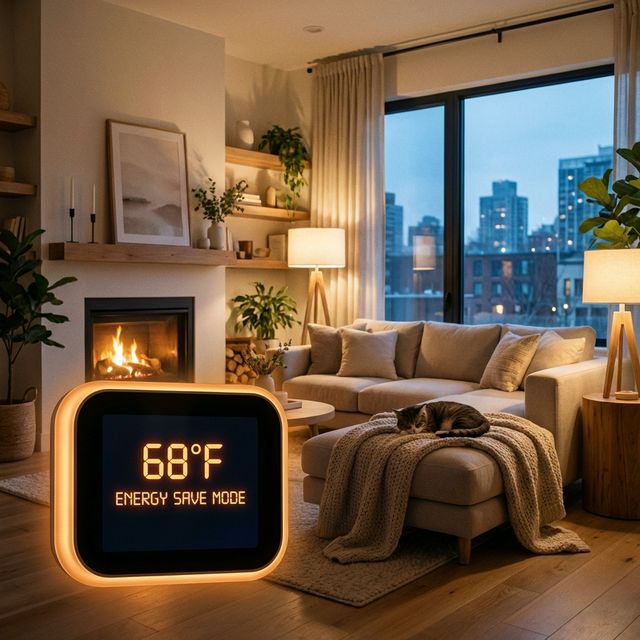
In October, the energy price cap rises again. The typical dual-fuel household will pay £1,755 a year — about £149 more than they paid in July. This is what's actually changing, what's worth doing, and what you can stop worrying about.
What's actually changing on 1 October
Ofgem's October cap is a 9.3% increase on July, adding £149 to the typical bill. The component-level changes:
Electricity unit rate rises from 24.50p/kWh to 28.62p/kWh — about £100 a year for a typical user. Gas unit rate rises from 6.24p/kWh to 7.42p/kWh — about £35 a year. Electricity standing charge rises from 57p/day to 61p/day. Gas standing charge from 29p/day to 31p/day. Standing charges together account for another £21 a year increase, on top of the £336 you already pay before any energy use.
The effect varies a lot by household. A 4+ bedroom home with electric heating could see £240 a year added. A typical 2–3 bedroom gas-heated home is at £149. A 1-bedroom flat with efficient appliances is closer to £89.
If you're on a variable tariff, your direct debit will be adjusted automatically in late September. The supplier doesn't ask. Watch your statements — if the new amount looks off compared to your usage, contact them. Direct debit overpayment is a real and quiet form of inflation that the energy companies do not flag to you.
Fixed or variable: a narrow window is open
Right now, fixed tariffs are quietly competitive again for the first time in a while. A 12-month fix is currently sitting around £1,620–£1,680 a year for a typical household — about £75–£135 below the projected cap. A 24-month fix is £1,580–£1,650. Both have small exit fees (£30–£75 in most cases) but no penalty if you stay the full term.
Whether to fix is one of those decisions where the right answer depends more on you than on the maths. If you'd lose sleep watching the cap fall in 2027 while you're locked into a higher rate, don't fix. If the bigger fear is opening a winter bill and not knowing what's coming, do. Both responses are reasonable. The 12-month fix is the safer middle: meaningful saving versus the cap, short enough you're not locked through a major rate cycle.
One thing worth doing before you switch: call your current supplier. If you're a long-standing customer on a variable tariff, ask whether they can match a new-customer fixed rate or offer a loyalty discount. They sometimes can. It costs you nothing to ask, and a fifteen-minute call has earned people 5–10% reductions without the admin of switching.
If you do decide to fix, do it before 31 October. Fixed-tariff availability tightens through winter — by November the good deals have usually been pulled or repriced.
The support that's actually there
Government support for energy bills has been quietly dismantled in places (the Winter Fuel Payment is the big one — around 10 million pensioners lost the automatic £200–£300 payment from 2024 onwards if they're not on Pension Credit). What remains is a patchwork. It's worth knowing what's still in it because most of it goes unclaimed.
Warm Home Discount — £150 off your electricity bill. Applications open October 2026. Pension Credit recipients usually receive it automatically. Low-income households on certain benefits need to apply via their supplier. Deadline 31 January.
Cold Weather Payments — £25 for each qualifying week when local temperatures stay at or below 0°C for seven consecutive days. Automatic for people on Universal Credit, JSA, ESA, Pension Credit. November through March.
Household Support Fund — up to £500 emergency assistance, administered by your local council. Eligibility varies by area. Cover for energy, food, essentials. Available through March.
Supplier hardship funds — every major supplier runs one. Grants typically £100–£750. Apply directly to your supplier if you're in financial difficulty or worried about falling behind. Response is usually within 10 working days.
There's no penalty for applying to more than one of these. The schemes don't usually affect each other's eligibility. If money is genuinely tight, apply to all four you might qualify for and let them sort out what you get.
If you're over state pension age and on a low income, check whether you qualify for Pension Credit. It's the gateway scheme — claiming it restores access to the Winter Fuel Payment and several other supports. Around 850,000 eligible pensioners don't claim it, leaving roughly £1,900 a year on the table each.
What actually moves the needle on usage
Energy-saving advice has a reputation for being patronising — "wear a jumper" energy. So I want to be precise here. The numbers below are from Energy Saving Trust modelling and real household monitoring data. They're not guesses, but they're averages: your home will be different. The point isn't that you should do all of them. It's that the cheap and free ones genuinely add up.
The heating stuff that actually matters. Lowering your thermostat by 1°C saves around £75 a year. Heating only the rooms you use saves around £45. Setting a 7-hour timer rather than running heating all day saves around £65. Closing curtains at dusk, £25. Bleeding radiators annually, £35. Reflective panels behind radiators, £20. Draft excluders, £30. Servicing the boiler annually, £40. None of these alone is dramatic. Doing all of them saves something like £335 a year on the heating side.
Electricity. LED bulbs in rooms you actually use save around £35 a year. Unplugging standby devices, £30. Washing at 30°C, £25. Air-drying instead of tumble-drying, £40. An 8-litre-per-minute shower head, £60. Full dishwasher loads only, £20. Using a laptop instead of a desktop where you can, £15.
Hot water. A four-minute shower discipline (with a timer if needed), £45. Fixing dripping taps, £35. Insulating the hot water cylinder, £30. Lowering the water heater to 60°C, £25. Water-saving shower head, £50. A timer on the immersion heater, £40.
There's a rough rule of thumb worth remembering: every 1% reduction in usage saves about £17.55 a year at current prices. A 10% reduction — not extreme, very achievable — is £176. A 15% reduction is £263.
Smart meters: what they're actually for
Most smart meter advice is generic. Here's the version that's useful.
A smart meter on its own doesn't save you money. What it does is give you real numbers, hourly, so the savings advice above stops being abstract. You can see exactly what your kettle costs, what the tumble dryer costs, what the oven costs at 6pm.
If you're on an Economy 7 or time-of-use tariff, the smart meter is the precondition for actually saving with it. Peak hours (4–7pm) are usually 35–45p/kWh — avoid running the washing machine, dishwasher, or electric oven then. Off-peak hours (11pm–6am) drop to 12–18p/kWh — set the dishwasher to run overnight, charge devices then, heat water on a timer if you have an immersion. The savings here are real: £50–£100 a year for a household that genuinely shifts usage.
The free apps that pull smart meter data and surface savings opportunities — Hildebrand Glow, Loop, Bright — are all worth trying. They're free, they don't sell your data on, and they make patterns visible that you'd never see in a quarterly bill.
Smart meters remain free to install through 2026. Demand peaks before winter, so if you want one, book the installation three weeks ahead.
Insulation: the highest-return investment available
If you've got money to spend on energy efficiency once, this is where to spend it.
Loft insulation (270mm) costs £300–£500 and saves £135–£180 a year. Payback in 2–3 years. The clearest win in the entire field.
Cavity wall insulation costs £500–£800 and saves £115–£155 a year. Payback in 4–6 years. Strong second choice.
Floor insulation costs £800–£1,200 and saves £60–£85 a year. Payback closer to 10–15 years, so worth doing when you're already replacing flooring.
Solid wall (external) insulation costs £8,000–£12,000 and saves £300–£450 a year. Payback 20–25 years — only worth it if you're staying long-term or you can get it grant-funded.
And the cheap stuff that genuinely works: draft excluders (£15–£30, saves £35/year), radiator reflector panels (£20–£40, saves £25), thick curtains (£50–£100, saves £40), pipe insulation (£10–£20, saves £15), hot water cylinder jacket (£15–£25, saves £30), letterbox brush (£5–£10, saves £10).
Several grants are worth checking before you pay for any of this. ECO4 offers free insulation for low-income households. Great British Insulation Scheme runs on £1bn of government funding for less-efficient homes. Local council grants vary widely — some areas offer up to £5,000. Search "[your council] energy grant" or use the eligibility checker on gov.uk. People routinely pay for insulation they could have had free.
A realistic four-week plan
You don't need to do everything at once. This is the rough order of return on time spent.
Week one — the free stuff. Turn the thermostat down 1°C. Set the heating timer to a 6-hour daily window. Wash at 30°C. Unplug devices on standby overnight. Close curtains at dusk. Read the smart meter daily, just to see the patterns. Apply for the Warm Home Discount. Register for the Priority Services Register if anyone in the household has a health condition or you're over state pension age. Call your supplier and ask about their hardship fund. Download an energy app. Expected savings: £100–£150 a year, for zero pounds spent.
Week two — small purchases. Replace bulbs in high-use rooms with LEDs (£35/year). Buy draft excluders (£30/year). Get radiator reflector panels (£25/year). Install a water-saving shower head (£50/year). Insulate the hot water cylinder (£30/year). Compare fixed tariffs using last year's actual usage figures from your annual statement. Book the smart meter if you haven't got one. Expected savings: £75–£100 a year, £50–£100 spent.
Week three — bigger moves. If a fixed tariff makes sense for you, switch. Get a programmable thermostat if you don't have one (£75/year). Configure time-of-use scheduling if your tariff supports it. Smart power strips on entertainment units (£25/year). Apply for ECO4 or Great British Insulation Scheme if you might qualify. Book a boiler service. Expected savings: £100–£150 a year.
Week four — long term. Get quotes for loft insulation if you don't have it. Check cavity wall eligibility. Build the savings habits into a monthly review. Set calendar reminders for tariff reviews and bonus expiries.
A realistic total across the four weeks is £300–£450 a year of saving. Not enough to offset the £149 cap rise on its own, but well above it, with enough left over to absorb at least one more bad announcement.
What to actually do this week
Three things, in order:
If you're on a variable tariff and a 12-month fix at around £1,620 looks affordable, switch. The window narrows from now through October.
Apply for the Warm Home Discount if you're eligible. Even if you're not sure, apply — the form takes ten minutes and £150 is £150.
Turn the thermostat down 1°C tonight. You will not notice. Your bill will.
There is no magical fix coming for energy prices. What's available is small, dull, repeated decisions taken on your own behalf by you, because no one else is going to. That's worth doing. It's also worth recognising it shouldn't have to be your job in the first place.
Frequently asked questions
When does the October 2026 price cap take effect? 1 October 2026 for standard variable tariffs. Ofgem confirms exact figures in late August. Direct debits are usually adjusted by suppliers in late September.
Can I still switch to a fixed tariff after 1 October? Yes, there's no formal deadline. But the best fixed deals usually disappear or reprice through autumn. August and September give you the most choice.
How much will my direct debit go up automatically? For a typical household, £12–£20 a month. For a high-usage household (4+ bedrooms, electric heating), £18–£25.
Does the Winter Fuel Payment cut affect my bill? Not directly. It removes the £200–£300 a year that previously offset bills for around 10 million pensioners not on Pension Credit. If you're over state pension age and on a low income, claiming Pension Credit restores access to it.
Can prepayment meter customers access the same tariff deals now? If you have a smart prepayment meter, yes — most prepayment rates are now equalised with credit-meter rates under the cap, and you can switch supplier. Traditional key/card meters still have fewer options, but switching to a smart meter is free.
What's the single fastest thing to do? Lower the thermostat by 1°C tonight. £75 a year, no purchase, no admin.
Should I fix for 12 or 24 months? For most households in March 2026, 12 months is the sensible middle ground. Wholesale prices may soften further, but a 24-month fix locks you in at potentially above-market rates if they do.
This article is based on Ofgem's published price-cap projections and Energy Saving Trust modelling as of March 2026. Energy prices and support schemes change frequently. Verify current rates with Ofgem and your supplier before making decisions. This is general information, not personalised advice.
Important
This article is based on Ofgem's published price-cap projections and Energy Saving Trust modelling as of March 2026. Energy prices and government support schemes change frequently. Always verify current rates with Ofgem and your supplier before making decisions. This is general information, not personalised advice.
Last updated:
Price cap figures are projections and subject to change. Ofgem confirms October 2026 rates in August 2026. All costs and savings are estimates based on typical households; actual results vary by property, usage, and location.
Sources & References
- Ofgem — Energy Price Cap — official quarterly price cap announcements and methodology
- Energy Saving Trust — independent advice on reducing home energy consumption with savings estimates
- GOV.UK — Warm Home Discount — official eligibility and application guidance for the £150 electricity discount
- Citizens Advice — Energy — consumer rights, debt support, and supplier complaint guidance