
Ultimate Guide to UK Household Bills in 2026
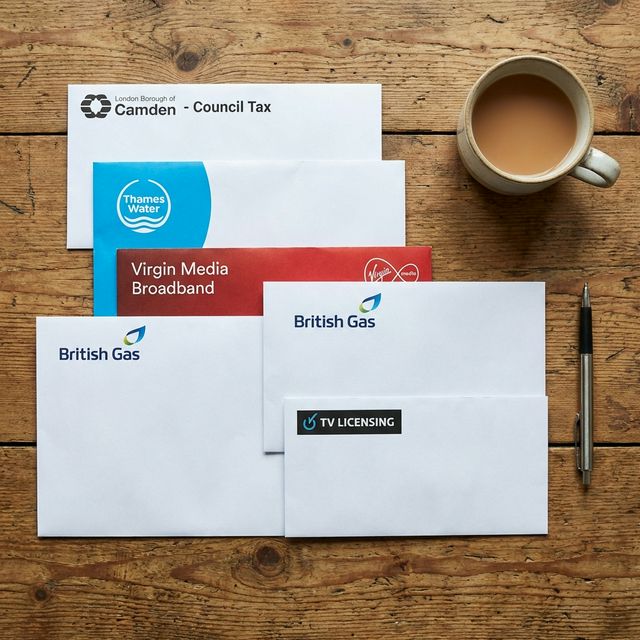
Key Points
UK household bills reached record highs in 2024, with the average family spending over £3,000 annually on energy alone. While the energy crisis has stabilized, 2026 brings new challenges and opportuni
Ultimate Household Bills Guide 2026
Ultimate Guide to UK Household Bills in 2026
Electric, Gas, Water, Council Tax & Broadband Saving Strategies
Quick Summary: What You'll Learn
- Complete UK utility cost breakdown for 2026
- Energy supplier switching and negotiation tactics
- Council tax band appeals and reduction strategies
- Smart meter optimization and energy-saving hacks
- Government support schemes and crisis grants
- Regional cost variations and optimization tips
- Broadband and TV bundling money-saving strategies
- Bill management templates and payment optimization
The UK Household Bills Landscape in 2026
UK household bills reached record highs in 2024, with the average family spending over £3,000 annually on energy alone. While the energy crisis has stabilized, 2026 brings new challenges and opportunities for bill optimization. Understanding the complex landscape of utilities, taxes, and services is crucial for maintaining household budgets.
This comprehensive guide covers every aspect of UK household bills, from understanding regional variations to implementing advanced cost-reduction strategies. Whether you're a first-time homeowner or looking to optimize long-established utility arrangements, this guide provides actionable strategies to reduce your annual household costs by hundreds or even thousands of pounds.
2026 Key Changes and Opportunities
- Energy price cap adjustments and new government support schemes
- Enhanced water bill social tariff programs
- Council tax band revaluation preparations and appeal opportunities
- New broadband competition and switching incentives
- Expanded crisis support funding and payment plan options
1. Electricity and Gas Bill Regional Breakdown (2026)
Energy costs vary significantly across the UK due to distribution network charges, regional infrastructure, and local market dynamics. Understanding these variations helps optimize provider selection and budgeting strategies.
Our guide to energy price rises covers this in more detail.
Average Annual Energy Bills by Region (2026)
Electricity (Annual Average)
- London: £1,050-1,250
- Southern England: £950-1,150
- Midlands: £900-1,100
- Northern England: £850-1,050
- Scotland: £800-1,000
- Wales: £850-1,050
- Northern Ireland: £900-1,100
Gas (Annual Average)
- London: £800-1,000
- Southern England: £750-950
- Midlands: £700-900
- Northern England: £650-850
- Scotland: £600-800
- Wales: £650-850
- Northern Ireland: Oil heating prevalent
Understanding Your Energy Bill Components
UK energy bills consist of several elements that affect your total cost:
| Component | What It Covers | Typical % of Bill | Your Control |
|---|---|---|---|
| Unit Rate | Price per kWh used | 75-80% | High - usage dependent |
| Standing Charge | Daily fixed cost | 15-20% | Low - supplier dependent |
| Government Levies | Policy costs, renewables | 3-5% | None - fixed nationally |
| VAT | 5% on energy bills | 5% | None - fixed rate |
Regional Optimization Strategies
High-Cost Regions (London, Southeast)
- Focus on time-of-use tariffs to avoid peak pricing
- Consider heat pumps despite higher electricity unit rates
- Maximize renewable generation with solar panels
- Join collective switching schemes for better rates
- Negotiate with suppliers using higher usage as leverage
Lower-Cost Regions (Scotland, Northern England)
- Take advantage of competitive local suppliers
- Consider electric heating options with lower unit rates
- Explore economy 7 tariffs for lower overnight rates
- Monitor for regional supply competition opportunities
- Use geographic arbitrage for energy-intensive appliances
2. Standing Charge Optimization Strategies
Standing charges are the fixed daily costs on energy bills, totaling £200-400 annually for most households. While unavoidable, strategic optimization can significantly reduce these costs.
2026 Standing Charge Ranges
Electricity Standing Charges
- Low-cost suppliers: 28-35p per day
- Big Six suppliers: 40-55p per day
- Green suppliers: 45-60p per day
- Premium tariffs: 50-70p per day
- Annual range: £102-255
Gas Standing Charges
- Low-cost suppliers: 25-30p per day
- Big Six suppliers: 35-45p per day
- Green suppliers: 40-50p per day
- Premium tariffs: 45-65p per day
- Annual range: £91-237
Standing Charge Optimization Tactics
1. Dual Fuel vs Single Fuel Analysis
Many households assume dual fuel deals save money, but this isn't always true:
Our guide to how to negotiate bills covers this in more detail.
##### Standing Charge Comparison Example:
Dual fuel deal (electricity + gas):
45p + 35p = 80p daily
Separate suppliers (best rates):
30p + 28p = 58p daily
Annual saving potential:
£80.30
2. Low Usage Household Strategy
If you're a low-energy user, standing charges represent a higher proportion of your bill:
- Prioritize suppliers with the lowest standing charges over unit rates
- Consider prepayment meters which often have lower standing charges
- Explore "no standing charge" tariffs (higher unit rates but better for low usage)
- Monitor the standing charge to unit rate ratio for optimal switching
3. Seasonal Property Optimization
Holiday homes and seasonal properties face unique standing charge challenges:
- Temporary disconnection: Request supply isolation during extended absences
- Minimal supply agreements: Some suppliers offer reduced standing charges for minimal usage
- Smart meter management: Use smart controls to minimize consumption during absence
- Landlord arrangements: Negotiate tenant changeover procedures to minimize void periods
Standing Charge Reduction Checklist
Compare standing charges across 5+ suppliers monthly
Calculate total annual standing charge costs (365 × daily rate)
Analyze dual fuel vs separate supplier savings potential
Consider prepayment options for lower standing charges
Request temporary disconnection for seasonal properties
Negotiate with current supplier using competitor rates
3. Smart Meter Advantages and Money-Saving Hacks
Smart meters offer more than just automatic readings - they unlock time-of-use tariffs, detailed consumption insights, and advanced energy management strategies that can reduce bills by 10-20%.
Time-of-Use Tariff Optimization
Smart meters enable dynamic pricing that varies throughout the day:
Peak Hours (16:00-19:00)
- Highest rates: 35-50p/kWh
- Avoid: Washing machines, dishwashers
- Minimize: Oven use, heating
Standard Hours (07:00-16:00, 19:00-23:00)
- Medium rates: 25-35p/kWh
- Moderate use acceptable
- Plan major appliance use
Off-Peak (23:00-07:00)
- Lowest rates: 15-25p/kWh
- Ideal: Electric vehicle charging
- Schedule: Laundry, heating
Advanced Smart Meter Strategies
1. Load Shifting Techniques
- Appliance scheduling: Use delayed start timers on washing machines, dishwashers, and dryers
- Water heating optimization: Heat water overnight and use thermal mass storage
- Electric vehicle charging: Program charging for off-peak hours (potential £500+ annual savings)
- Heat pump timing: Pre-heat homes during off-peak periods before peak rates begin
- Battery storage integration: Charge home batteries during off-peak, discharge during peak
2. Consumption Monitoring Hacks
Use your smart meter display to identify energy waste:
- Baseline monitoring: Check overnight consumption (should be under 200W)
- Appliance identification: Turn devices on/off individually to identify power draws
- Phantom load detection: Discover devices consuming power when "off"
- Seasonal comparison: Track monthly usage patterns for optimization opportunities
- Real-time feedback: Use live display to modify behavior during high-consumption activities
3. Smart Meter Tariff Selection Strategy
Choose the right smart meter tariff based on your household profile:
| Household Type | Best Tariff | Key Strategy | Potential Savings |
|---|---|---|---|
| 9-5 Workers | Time of Use | Off-peak appliance use | 15-25% |
| Retirees/Home Workers | Flat Rate | Consistent usage patterns | 5-10% |
| EV Owners | EV-specific TOU | Overnight charging | 30-50% |
| Heat Pump Users | Heat Pump TOU | Smart heating controls | 20-35% |
Smart Meter Installation and Optimization
Pre-Installation Preparation
- Research available time-of-use tariffs from your supplier before installation
- Identify major appliances that can be scheduled (washing machine, dishwasher, EV charger)
- Plan smart home integration (smart plugs, heating controls, battery storage)
- Document current usage patterns for comparison after installation
Post-Installation Optimization
##### 30-Day Optimization Plan:
Week 1:
Monitor baseline consumption patterns and identify peak usage times
Week 2:
Implement basic load shifting for major appliances
Week 3:
Fine-tune heating and cooling schedules using smart controls
Week 4:
Evaluate tariff options and switch to optimal time-of-use plan
4. New Government Support Schemes for 2026
The UK government has expanded household bill support in 2026, introducing new schemes and enhancing existing programs to help families manage rising costs. Understanding eligibility and application processes can provide substantial savings.
Major 2026 Support Schemes
1
Enhanced Warm Home Discount
£200 annual discount extended to 3 million households
2
Energy Bill Support Continuation
Targeted support for vulnerable households up to £400 annually
3
Council Tax Energy Rebate
£150 rebate for Band A-D properties, enhanced eligibility
Warm Home Discount Scheme (Enhanced 2026)
The expanded scheme now covers significantly more households with simplified eligibility:
Automatic Qualification (Core Group)
- Pension Credit recipients: Automatic £200 discount applied to electricity bill
- Low-income households: Those receiving certain means-tested benefits
- High energy cost homes: Properties with poor energy efficiency ratings
- Vulnerable groups: Households with disabled members or young children
Broader Group Eligibility
Additional households may qualify based on income and energy costs:
##### Broader Group Criteria (all must apply):
- Household income below £17,000 annually
- High energy costs relative to income (over 10% of income on energy)
- Receive Child Tax Credit, Working Tax Credit, or Universal Credit
- Not already receiving Cold Weather Payment
Energy Company Obligation (ECO4) Scheme
ECO4 provides free home insulation and heating improvements for eligible households:
Available Improvements
- Cavity wall insulation (saves £200+ annually)
- Loft insulation (saves £150+ annually)
- External wall insulation (saves £400+ annually)
- Boiler replacement (saves £300+ annually)
- Heat pump installation (saves £500+ annually)
- Smart heating controls (saves £100+ annually)
Eligibility Requirements
- Household income under £31,000
- Property EPC rating of D or below
- Receive qualifying benefits
- Own your home or private tenant with landlord consent
- Not had ECO improvements in last 3 years
Local Authority Support Schemes
Many councils provide additional support beyond national schemes:
Discretionary Energy Grants
- Emergency fuel vouchers: £50-200 for crisis situations
- White goods replacement: Grants for energy-efficient appliances
- Heating system repairs: Up to £1,000 for emergency boiler repairs
- Debt management support: Negotiation with suppliers and payment plans
Council Tax Energy Rebate (2026 Enhanced)
Expanded eligibility for council tax energy rebate:
##### Standard Eligibility
- Council tax band A-D properties
- £150 automatic rebate
- Applied as credit to council tax account
- No application required
##### Enhanced Eligibility (New 2026)
- Band E-F properties if receiving benefits
- Up to £300 for vulnerable households
- Applications open January-March 2026
- Combined with other local support
Application Strategy for Maximum Support
Support Scheme Application Checklist
Check Warm Home Discount eligibility with your energy supplier
Apply for ECO4 home improvements through approved installers
Contact local authority about discretionary support schemes
Verify council tax energy rebate automatic application
Register for priority services with utility companies
Explore charity grants from British Gas Energy Trust, EDF Energy Trust
5. Energy Supplier Switching and Negotiation Strategies
The UK energy market offers significant switching opportunities in 2026, with over 50 active suppliers and new tariff structures. Strategic switching can save households £300-600 annually.
Frequently Asked Questions
1. What are the average UK household bills in 2026?
The average UK household spends approximately £4,200-5,500 annually on essential bills in 2026. This includes electricity (£900-1,200), gas (£700-1,000), water (£400-600), council tax (£1,500-2,000), and broadband/phone (£400-600). Regional variations are significant, with London households paying up to 40% more than northern regions. Energy bills represent the largest component and show seasonal fluctuations, with winter months often doubling summer consumption. These figures exclude discretionary services like premium TV packages, mobile phones, and insurance, which can add another £1,000-2,000 annually. Understanding these benchmarks helps identify optimization opportunities and budget effectively for essential household services.
2. How often should I switch energy suppliers to get the best deals?
The optimal switching frequency for energy suppliers is typically every 12-18 months, though market conditions in 2026 may warrant more frequent reviews. Energy prices fluctuate quarterly, and introductory rates often expire after 12 months, reverting to higher standard tariffs. Monitor your bills monthly and actively compare rates every 6 months to identify opportunities. Set calendar reminders before fixed-term contracts expire to avoid automatic rollovers to expensive standard rates. However, avoid excessive switching (more than twice yearly) as it can impact credit scores and create administrative confusion. Focus on genuine savings of at least £100 annually to justify switching costs and effort. Use comparison websites, but also check supplier websites directly, as exclusive online deals may not appear on comparison platforms.
3. Can I appeal my council tax band, and what's the success rate?
Council tax band appeals are possible and can result in significant annual savings, but success rates vary by region and circumstances. In England, successful appeals average 15-25%, while Scotland and Wales show higher success rates of 30-40% due to more recent revaluations. Valid grounds for appeal include: property alterations that reduce value, error in original valuation, significant local changes affecting property values, or evidence that neighboring similar properties are in lower bands. The appeal process involves contacting the Valuation Office Agency (England/Wales) or local assessor (Scotland) with supporting evidence. Appeals can take 6-18 months to resolve, but successful appeals often backdate to the original valuation date, potentially saving thousands in refunds. However, bands can also be increased if the appeal reveals the property was under-valued, so careful consideration and professional advice may be worthwhile for valuable properties.
4. What government support is available if I can't pay my energy bills?
Multiple government and charity support schemes exist for households struggling with energy bills. The Warm Home Discount provides £200 annually for eligible households, while the Energy Bill Support Scheme offers targeted assistance up to £400 for vulnerable families. Local authorities administer discretionary support funds, often providing emergency vouchers worth £50-200 for immediate crisis situations. Supplier-specific trust funds (British Gas Energy Trust, EDF Energy Trust, E.ON Energy Fund) offer grants of £200-2,000 for bill debt and essential appliances. Citizens Advice provides free debt advice and can negotiate payment plans with suppliers. The government's Household Support Fund, distributed through local councils, provides emergency assistance for utilities, food, and essential costs. Additionally, Priority Services Registers protect vulnerable customers from disconnection and provide enhanced support during outages. Apply for multiple schemes simultaneously, as eligibility often overlaps and combined support can provide substantial relief.
5. Should I choose a fixed or variable rate energy tariff in 2026?
The choice between fixed and variable energy tariffs in 2026 depends on your risk tolerance and market outlook. Fixed tariffs provide price certainty but often cost 10-20% more than initial variable rates. However, they protect against price rises during the contract period, which proved valuable during 2022-2024's volatile market. Variable tariffs offer flexibility and potential savings when wholesale prices fall, but expose you to price increases. In 2026's stabilizing market, consider your circumstances: risk-averse households with tight budgets should prefer fixed rates for predictability, while financially flexible households might benefit from variable rates and active management. Hybrid approaches include fixing electricity (typically more volatile) while keeping gas variable, or choosing 12-month fixed terms rather than longer periods. Monitor the difference between fixed and variable rates; if fixed rates exceed variable by more than 15%, variable tariffs often provide better value with active management.
Related Money-Saving Guides
Cost of Living UK 2026Comprehensive strategies for managing rising UK living costs
Good Budgeting Techniques UK 2026Master family budgeting with proven UK strategies
Conquer Your Debt UKDebt management and reduction strategies for UK households
Stay Updated on UK Bill Changes
Get the latest updates on energy prices, government schemes, and money-saving tips delivered to your inbox.
Subscribe Free
No spam, unsubscribe anytime. Join 10,000+ UK households saving money on bills.